Mastering EMC One Level at a Time
LEVEL 5 - Transmission Lines for EMC Engineers
Electrical signals propagate in circuits with a finite velocity. In many cases, the time delays associated with signal propagation are negligible. However, for signals with high-frequency content that propagate significant distances, these delays cannot be ignored. Transmission line modeling is a relatively simple and intuitive way to analyze circuits with signals propagating on circuit board traces or cables whose length cannot be neglected.
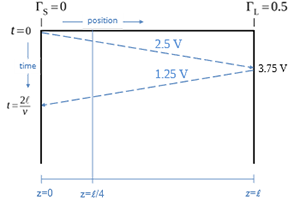
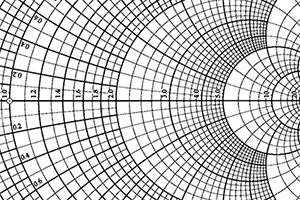


Here are a couple of laboratory exercises you can complete that will help you get familiar with measuring signals in the time and frequency domains.
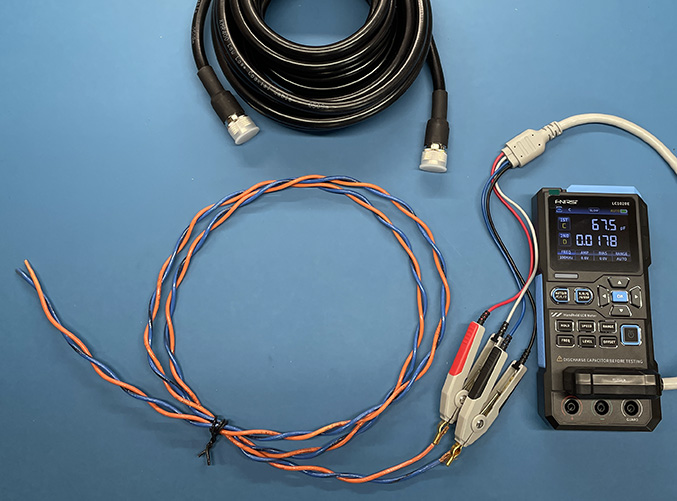
Lab Exercise 13-1: Measuring Characteristic Impedance and Propagation Velocity (Method 1)
The characteristic impedance and propagation velocity of a transmission line can be determined from measurements of the capacitance and inductance per unit length.
Laboratory Exercise 13-1: Measuring Characteristic Impedance and Propagation Velocity (Method 1)
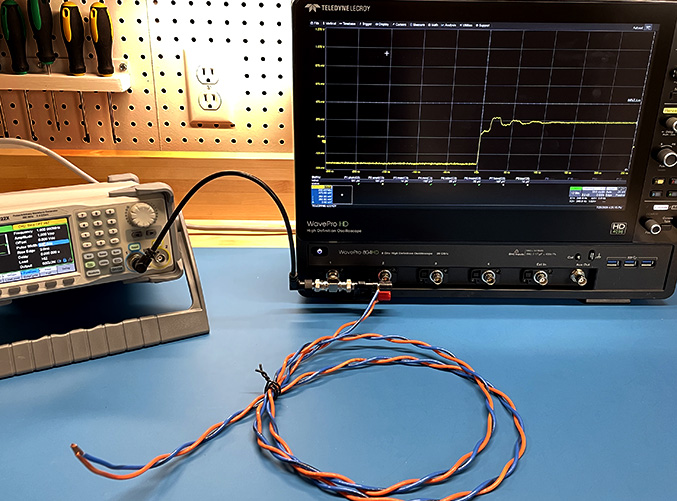
Lab Exercise 13-2: Measuring Characteristic Impedance and Propagation Velocity (Method 2)
The characteristic impedance and propagation velocity of a transmission line can be determined from the step response measured at the transmission line's input.
Laboratory Exercise 13-2: Measuring Characteristic Impedance and Propagation Velocity (Method 2)