Mastering EMC One Level at a Time
LEVEL 4
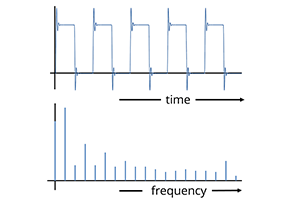
Conducted and radiated emissions limits are specified as a function of frequency. Many immunity tests are performed using swept-frequency sources. Designing for electromagnetic compatibility requires a basic understanding of how signals that are functions of time contain power at various frequencies. It’s also important to understand how noise with a given frequency content will impact a signal that is a function of time.
Here are three laboratory exercises you can complete that will help you get familiar with measuring signals in the time and frequency domains.
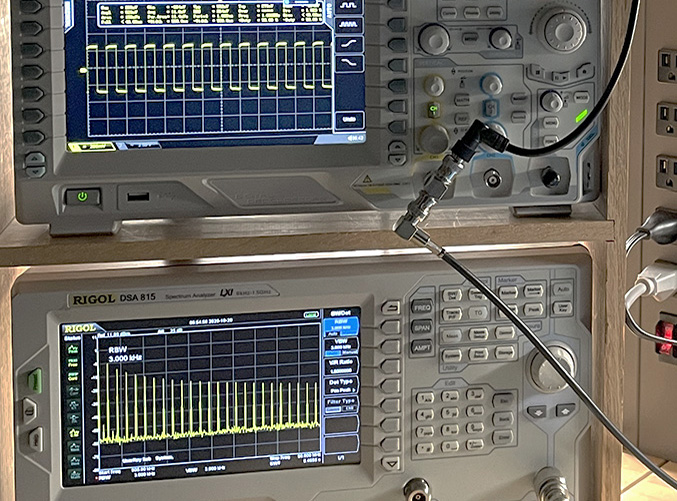
Lab Exercise 10: Spectrum Analyzer Measurements
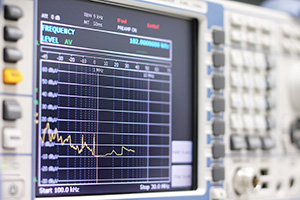
This exercise gives students an opportunity to explore signal behavior in the time and frequency domains. It also helps them to understand how the displayed signal is affected by various spectrum analyzer settings.
Laboratory Exercise 10: Time and Frequency Domain Measurements
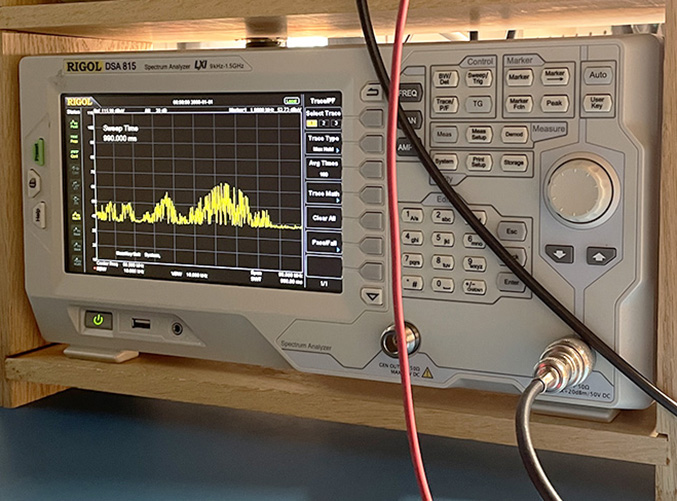
Lab Exercise 11: Spectrum Analyzer Measurements of Impulsive Noise
This exercise demonstrates how impulsive noise and transients affect spectrum analyzer measurements.
Laboratory Exercise 11: Spectrum Analyzer Measurements of Impulses
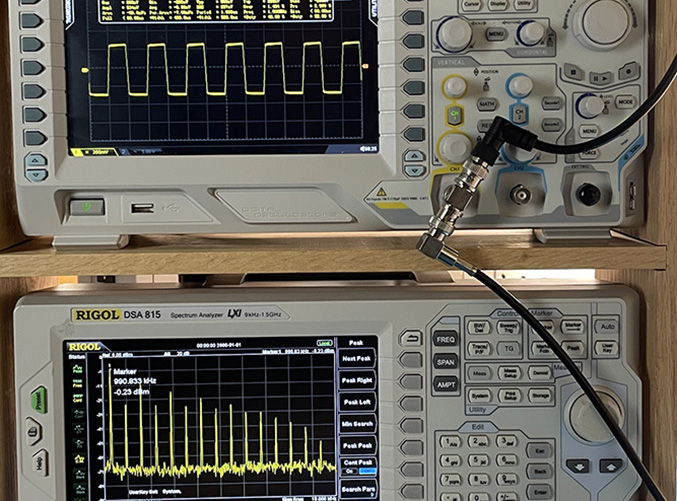
Lab Exercise 12: Measuring Harmonics of a Trapezoidal Waveform
The trapezoidal waveform plays a very important role in modeling the behavior of digital signals. It's important for EMC and signal integrity engineers to be well-acquainted with these waveforms in both the time and frequency domains.
Laboratory Exercise 12: Harmonics of a Trapezoidal Waveform