EMC Question of the Week: October 28, 2019
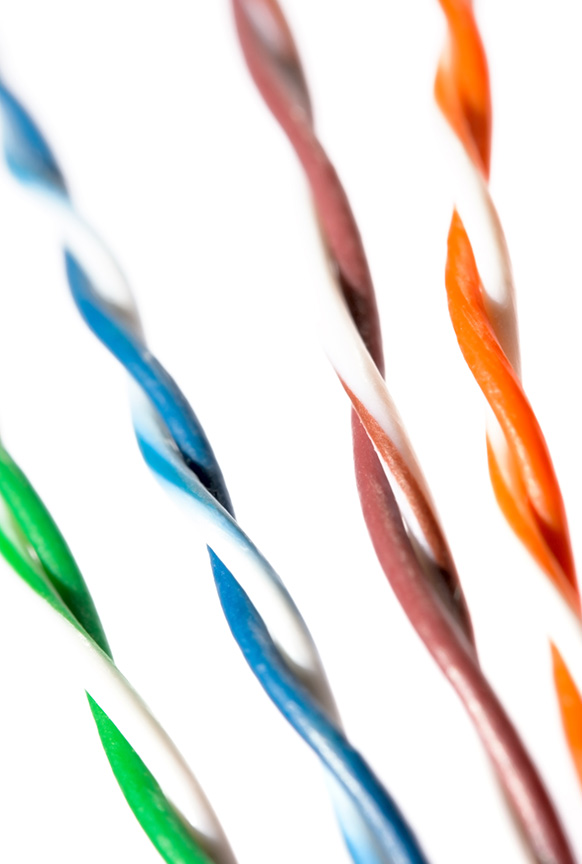
Generally speaking, which type of signal should never be transmitted on a twisted wire pair?
- high-speed single-ended signals
- high-speed pseudo-differential signals
- 1 Gbps differential signals
- all of the above
Answer
The best answer is "a". Single-ended signals are unbalanced and should be transmitted on unbalanced transmission lines (e.g. microstrip traces or coaxial cables). Sending an unbalanced signal down a balanced transmission line generates a common-mode voltage with an amplitude that is half of the signal voltage. At very low frequencies, this may be ok; but for high-speed signals, this common-mode voltage can be a significant radiated emissions source.
Pseudo-differential signals can usually be driven on shielded twisted wire pairs without being an EMC concern. However, nearly all pseudo-differential signal drivers produce a common-mode pulse with each transition. Care must be taken to attenuate this common-mode pulse before driving an unshielded twisted wire pair at high data rates.
Of course, unshielded twisted wire pairs are routinely used to carry differential signals at 1 Gbps (and higher) data rates. In these situations, it is critically important to avoid driving the cable with any significant unintentional common-mode voltage.
Have a comment or question regarding this solution? We'd like to hear from you. Email us at