
EMC Question of the Week: July 8, 2019
Products that connect exposed metal to the earth ground in the power cord for safety rely on
- the earth to act as an infinite current sink
- fuses or circuit breakers to remove power in the event of a short
- ground-fault protection devices installed in the electrical panel
- warning labels
Answer
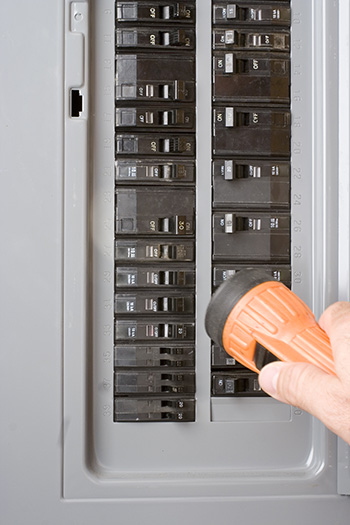
The best answer is "b". If a phase wire inadvertently shorts to the grounded metal, the ground connection ensures that a large amount of current will be drawn. This will trip the fuse or breaker and disconnect the power. This safety system has been employed for over a hundred years. It helps to prevent electrical faults in consumer products from presenting an electrocution or fire hazard.
The first choice is not correct for a couple of reasons. First, the earth ground is not an infinite current sink. The connection to the earth can have a significant resistance. Second, earth ground wires connect to the power neutral (and plumbing and/or building metal) at the electrical box. The breakers will trip even if the connection to the dirt around the building is lost.
Ground fault protection devices that remove power when there is a significant difference in the current on the two wires supplying power to the device are a great safety feature; particularly for products that don't have an earth ground wire. However, these devices are not required on all products or circuits. Most products with exposed metal and earth ground wires do not rely on them.
Warning labels are of little value to people who can't or don't read them; and they are certainly no substitute for a safe design.
Have a comment or question regarding this solution? We'd like to hear from you. Email us at